A tuning changes the map, not only the pitch
Standard guitar tuning runs E–A–D–G–B–E from the lowest string to the highest. An alternate tuning changes one or more of those pitches. That sounds like a small technical adjustment, but it redraws the instrument: familiar chord shapes move, open strings meet fretted notes in new ways, and a single low or high note can continue ringing while the harmony changes around it.
No tuning belongs exclusively to indie folk, and an alternate tuning does not automatically make a performance more authentic. It is simply a different set of possibilities. For a listener, the useful clues are sustained bass notes, bright open strings and chords that seem wider or less settled than their standard-tuned equivalents.
Drop D: one string creates a deeper floor
Drop D is D–A–D–G–B–E. Only the lowest string changes: the standard low E is lowered by one whole step to D. The remaining five strings keep their usual pitches, so much of the instrument still feels familiar to a player while the bottom of the sound becomes broader.
Listen for a low D that returns beneath several chords. Because three strings now carry a D at different octaves, a guitarist can let that note ring as a drone or use the two lowest strings for a compact, weighty interval. In a quiet acoustic arrangement, that extra depth can supply movement without adding bass guitar or heavier percussion.
DADGAD: a sound that refuses to settle too quickly
DADGAD is exactly what its name says: D–A–D–G–A–D. The open strings contain no third, the note that normally tells us whether a chord is major or minor. Instead, D and A form a firm frame while G adds suspension. That is why an unfretted DADGAD guitar can feel open and expectant rather than clearly happy or sad.
This layout makes drones easy to preserve while a melody moves on neighbouring strings. In fingerstyle music, one hand can keep a repeating bass and allow upper notes to bloom above it. As a listener, follow the notes that do not change. The emotional colour often comes from the moving line rubbing gently against those fixed open strings.
Open D and Open G: the guitar begins with a chord
In an open tuning, the unfretted strings already form a chord. Open D is D–A–D–F♯–A–D, which produces a D-major chord; Open G is D–G–D–G–B–D, which produces G major. The crucial notes are F♯ in Open D and B in Open G: each supplies the major third that DADGAD deliberately leaves out.
This changes more than convenience. A guitarist can move simple shapes while other strings continue to ring, producing overlapping harmonics and a sense of air around the notes. Slide playing also becomes more direct because one straight position can sound a complete chord. You may hear a rich shimmer even when the fretting hand is doing relatively little.
A five-minute listening exercise
Choose one acoustic track without trying to identify its tuning. First, listen only to the lowest note: does it return under changing chords? Next, follow the highest strings and notice whether they keep ringing through transitions. On a third pass, listen for one pitch that stays in place while the melody moves around it.
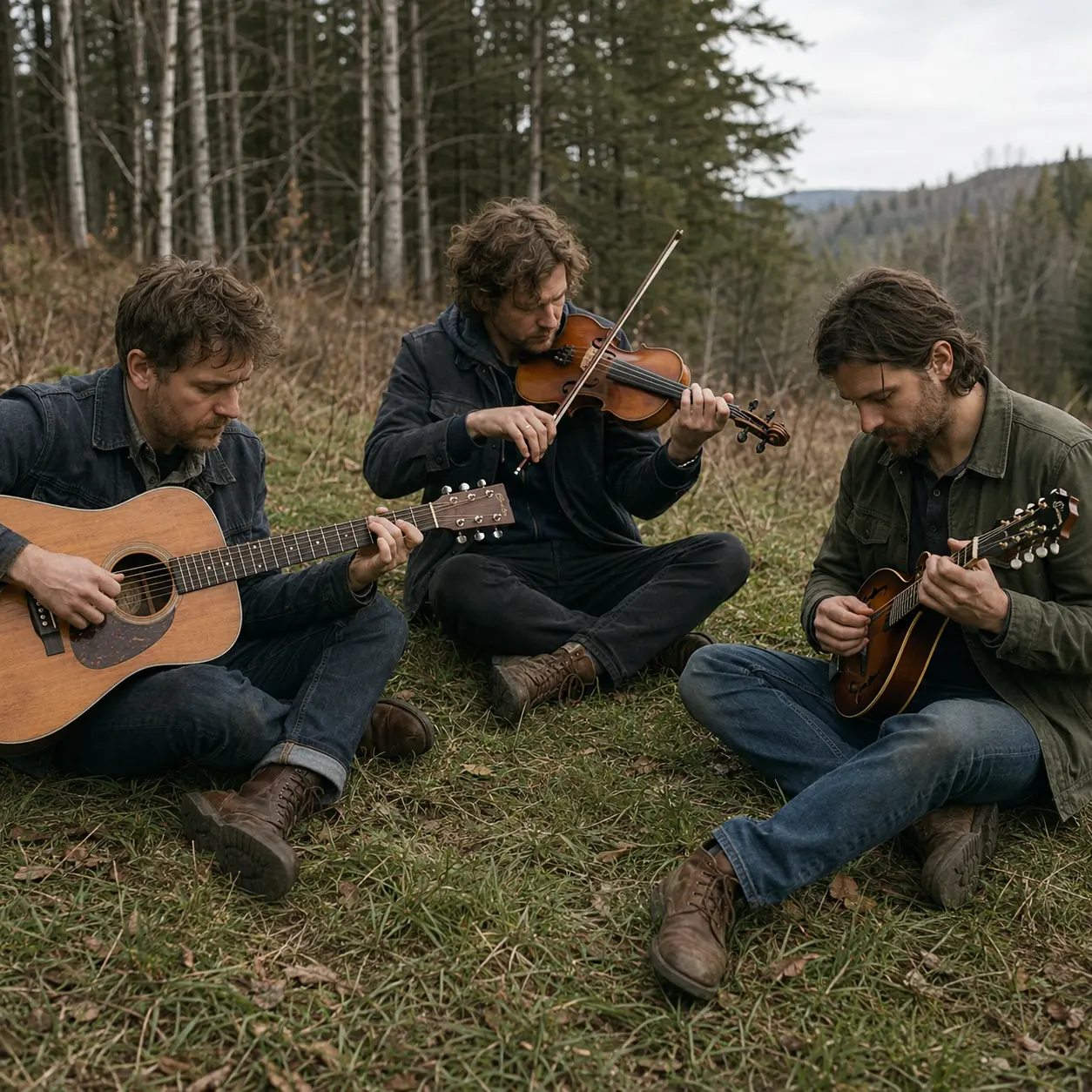
Then compare the guitar with the voice, violin, mandolin or percussion. Does the guitar carry the pulse, provide a drone or leave gaps for another part? The earlier guide to indie-folk arrangements can help you name those roles. The point is not to win a tuning quiz; it is to hear how a limited set of strings creates depth, tension and space.
For players: tune slowly and listen to the instrument
Use a reliable tuner and adjust one string at a time. The tunings above mostly lower strings from standard pitch, but any change affects tension. A string tuned too low may feel loose or buzz; a string taken too high can place unnecessary stress on the string and instrument. Stop if the pitch or resistance does not behave as expected.
Players who stay in a substantially lower tuning may prefer a different string gauge or a professional setup. Scale length, pitch and string mass all affect tension, so there is no single perfect set for every guitar. For occasional exploration, make small changes, check the tuning again after the strings settle and let the sound—not a rule—decide whether the result serves the song.
The most useful question is not ‘Which tuning is this?’
A recording rarely needs to announce its tuning. The more revealing question is what remains constant while everything else moves. A low drone can make a verse feel grounded; an unresolved open string can keep a chorus reaching forward; a full open chord can turn a simple rhythm into a broad field of sound.
Return to the radio and listen for one of those relationships. Whether the guitar is in standard tuning, Drop D, DADGAD or something else, attentive listening reveals the same craft: a small physical choice shaping the emotional space of a song.