A pattern, not a popularity chart
A handful of release announcements cannot prove what an entire genre is doing. They can, however, reveal interesting conversations taking place at the same moment. This article reads four recent official announcements side by side and asks what they share.
The result is an editorial observation, not market research: contemporary folk is looking backward and outward at once. Old material is being handled personally, musicians are gathering in rooms again, community is becoming part of the sound, and the borders around folk remain usefully untidy.
Tradition is being treated as material, not decoration
Jake Xerxes Fussell’s The Old Beloved Path is presented by Fat Possum as a record that combines traditional sources into new work. The label describes an artist who does not preserve songs behind glass; he reshapes them until they make sense inside his own worldview.
A parallel appears in The Tallest Man on Earth’s Just Beyond Endless Mountain. ANTI- connects the record to Kristian Matsson’s return to Dalarna and to Swedish polskas, field recordings and local musical memory. Neither project treats tradition as a costume. The past becomes a tool for making something current.
The room is becoming audible again
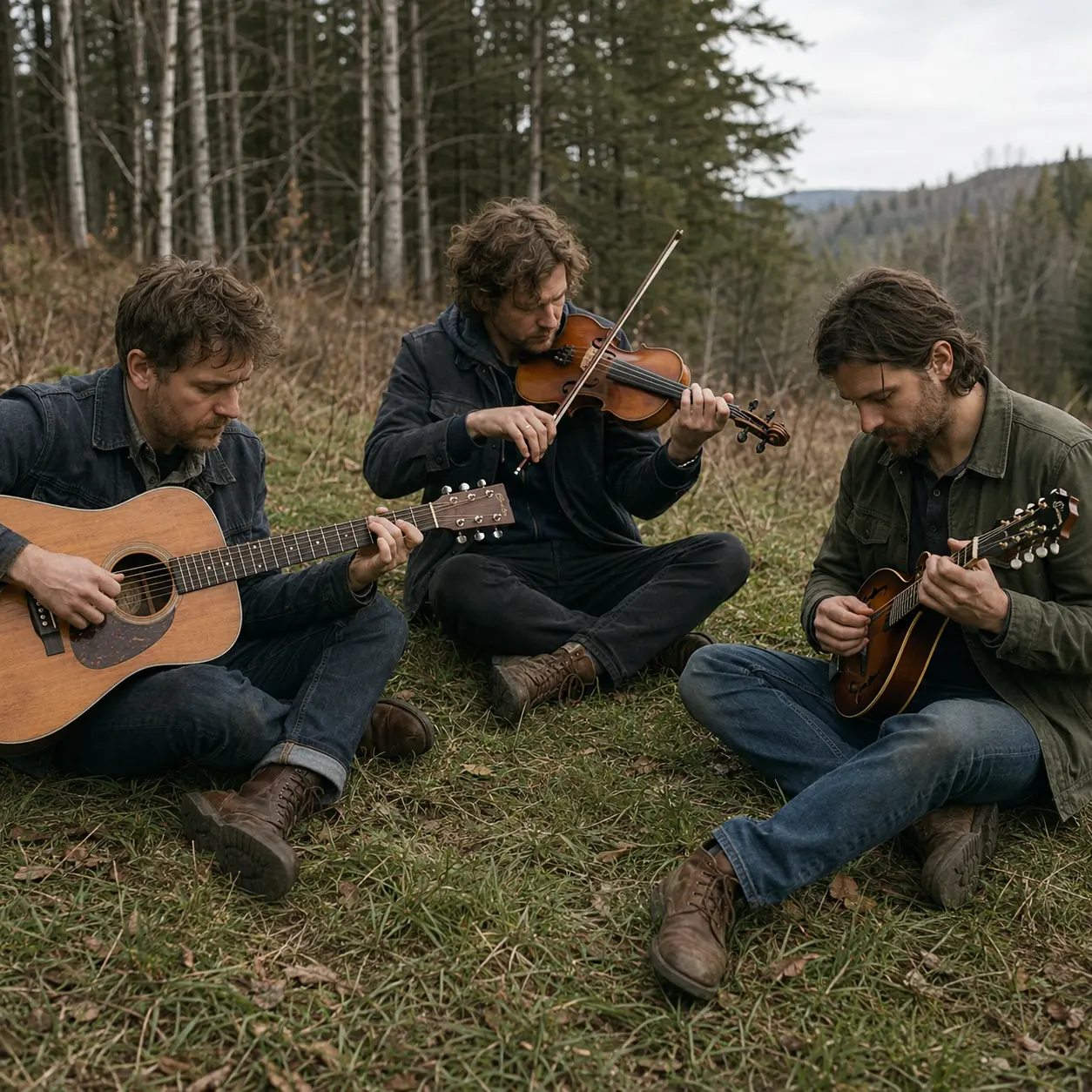
Two of the same announcements place unusual emphasis on musicians playing together. Fat Possum says Fussell wanted a document of people performing live in a room with a deliberately limited palette. Rhiannon Giddens’ official store describes Hope Is the Thing With Feathers as intentionally recorded live, with few overdubs and a focus on the feeling of community.
That does not mean polished production is disappearing. It suggests that interaction itself is being valued as part of the arrangement: the slight push and pull between players, the air around an instrument and the sense that a performance happened rather than being assembled piece by piece.
Folk still refuses a tidy border
Sub Pop describes Sera Cahoone’s I’ve Missed You All These Years as moving through blues, folk, pop and country. Folk Alliance International takes an even wider view, placing singer-songwriters, global roots traditions and experimental electronic fiddle music inside the same broad family of music carried by people and stories.
For listeners, this is good news. A useful folk identity does not need every track to use the same instruments or obey a fixed level of rusticity. The more revealing questions are whether a song carries a point of view, whether the arrangement leaves room for human detail and whether its relationship with tradition feels lived rather than borrowed.
What to listen for next
Listen for records that make the source of their sound visible: a regional rhythm, an old song changed by a new perspective, a small group responding in real time or an arrangement that crosses a genre line for a reason.
The strongest current here is not nostalgia. It is continuity—the idea that folk survives by being handled, questioned and carried forward by different people.